Dieser Beitrag ist auch verfügbar auf:
 Deutsch
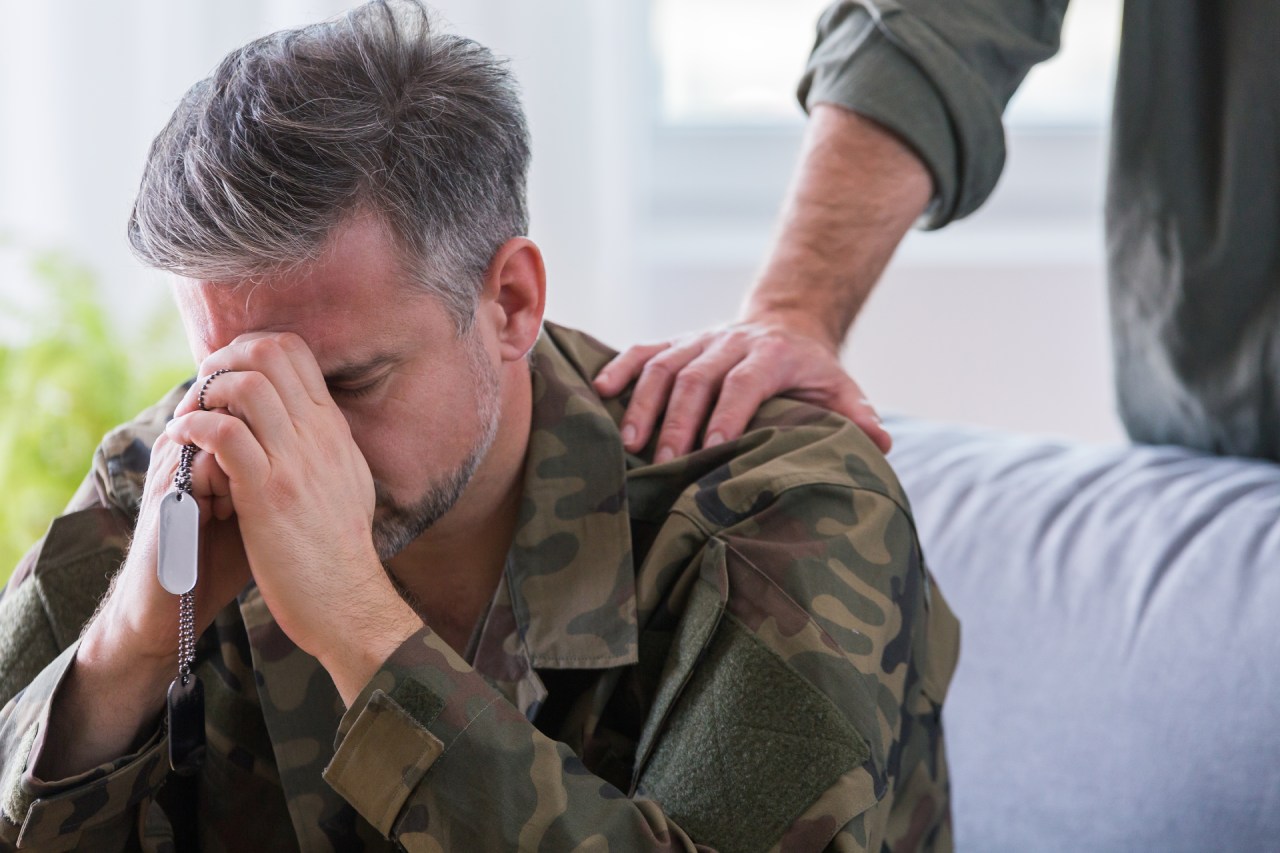
“Once I woke up with my hands on my wife’s neck,” says Julian Goodrum. Since the US soldier returned from his deployment in Iraq, he has never been the same. He sleeps badly, nightmares plague him, he has even become violent.
Julian Goodrum suffers from post-traumatic stress disorder, or PTSD for short. PTSD is a long-term consequence of trauma: the psyche reacts with a certain delay to a stressful situation, such as experiences of war or catastrophe. Those affected, like Julian Goodrum, cannot process what they have seen and are haunted by the images. Often all it takes is a scent, a color or a certain situation – and the frightening moments return.
Difficult to grasp for those affected
In the USA, one in five war veterans now suffers from post-traumatic stress disorder. But civilian rescue workers are also at risk: around 16 percent are struggling with PTSD. Those affected usually do not know how to deal with this. “For most people, especially in the military, a physical injury is easier to accept than a psychological one,” believes Julian Goodrum. If he had the choice, he would rather have lost a leg than his mental health, he says.
The heaviest loads
Most sufferers consider their fears and nightmares to be completely normal. However, this is a fallacy. “Untreated PTSD leads to problems over several years in your private life, in your relationship, you perform poorly at work . But people don’t realize that they have a mental illness,” says Marion Krüsmann from the Trauma Outpatient Clinic at Ludwig Maximilian University in Munich.
However, a recent study from the USA showed what can happen if traumatic experiences are not dealt with. According to her, Iraq veterans committed around 100 murders and 115 suicides last year. And yet most veterans still shy away from seeing a psychologist.
Talking about it helps
A catastrophic experience does not necessarily have to trigger a trauma. When the roof of the ice rink in Bad Reichenhall collapsed in January 2006, the rescue services were faced with a scene of horror. Dozens of dead and injured, mainly children children and young people. But after every operation in Bad Reichenhall, psychologically trained employees called the emergency services together in discussion groups. During these “debriefings”, every volunteer was able to get their experiences off their chest. As a result, none of those involved suffered post-traumatic stress disorder.
Every mission can trigger trauma
Nevertheless, every deployment is new and can potentially cause trauma. Paramedic Stefan Limmer saved lives for 18 years. Then came the mission in which he tried to help a boy who had been run over by a car. The sight of dead children or familiar people can be too much even for experienced rescue workers. Stefan Limmer hasn’t had a peaceful night since this experience. “In the beginning, it always made me cry, then I woke up at four o’clock every night and couldn’t go back to sleep for years.”
Living memory
But how can trauma be identified? Researchers have examined the brain waves of patients with PTSD and found that their memory stores the problematic images in the cortex, where our emotional memory is also located. This means that every memory brings the images back to life as if the horror had just happened. For many of those affected, their thoughts and memories only revolve around the accident.
Relocation in the brain
Studies have shown that traumatic memories migrate from the cortex to the brain stem after psychotherapy. This is where the area for logically structured thinking is located. Images and memories from this region of the brain are processed and can no longer be recalled so easily. Paramedic Stefan Limmer had the courage to talk to his colleagues about his terrible experience.
It took him a long time to get rid of his nightmares, he kept seeing the dead boy’s face. But with the help of a psychiatrist and many conversations, he was also able to overcome his trauma.