What causes forest fires?

Dieser Beitrag ist auch verfügbar auf:
 Deutsch
This is how forest fires behave
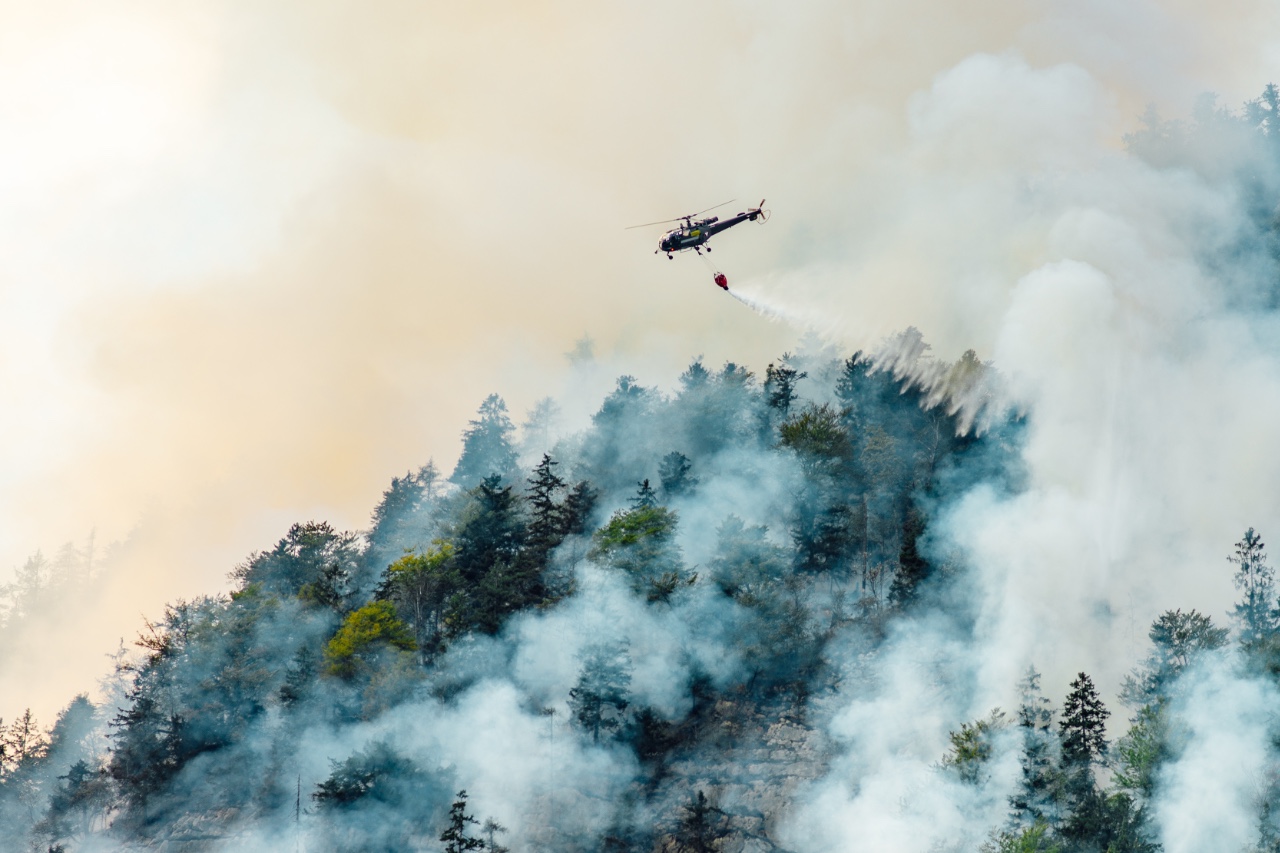
A strip of fire up to two meters wide works its way through the landscape with the wind. Behind him remains a charred gray surface. It begins with a source of fire, the cause of the fire. At first, the fire grows evenly around this hearth.
Because the flames need oxygen, they increasingly orient themselves in the direction from which most of it flows. If a wind then picks up, it drives the flames in front of it like a fire front. This so-called fire fringe lengthens the further it progresses. The charred area left behind expands.
According to the FVA ( Forstliche Versuchs- und Forschungsanstalt Baden-Württemberg ), about 75 percent of forest fires in Germany are ground fires, also known as wildfires. Their flames devour deadwood, brushwood and litter. As a result, ground fires develop light gray smoke and can be spotted as such from a distance. At an average speed of 500 meters per hour, they move through nature.
As soon as treetops catch fire, the fire is difficult to stop
If the conditions are right, the near-ground wildfire develops into a full fire. This means that the flames flicker up trees and set them on fire. Therefore, experts also speak of crown fires. In the treetops, the oxygen-poor smoke quickly dissipates, the oxygen-rich air above the forest feeds the flames. Therefore, these fires spread rapidly: up to 1800 meters per hour are possible.
Wie der Klimawandel unseren Wald verändert
Causes of a forest fire
According to the Federal Ministry of Food and Agriculture (BML), the cause of most fires in recent years is unknown. The BML collects nationwide statistics on forest fires from the data of the federal states. The most common known cause in recent years has been negligence.
These include agricultural or industrial measures that then trigger a fire. Electrical cables or timber harvesting can also start a fire. The BML cites the general public as the most common reason for negligently caused forest fires in 2018. Campers , walkers, children and others often behave carelessly. The result: forest fire.
Climate change and monocultures increase the risk of forest fires
In addition, the conditions for fires have improved with the increasing climate crisis. Weather extremes and drought favor fire as much as forestry itself. Stable ecosystems of trees and other plants have been displaced by high-yielding monoplantations.
Row after row trees are grown so that they can be felled after the shortest possible time in order to make a profit with the wood. The trees cannot cope with the climatic conditions of the region everywhere. For example, they are susceptible to diseases or their roots do not reach deep enough for the groundwater reservoirs in the soil.
As a result, other forest plants such as mosses and ferns also have a hard time. The entire area becomes barren and dry. A spark in summer turns into a fire more quickly here than in a healthy mixed forest.